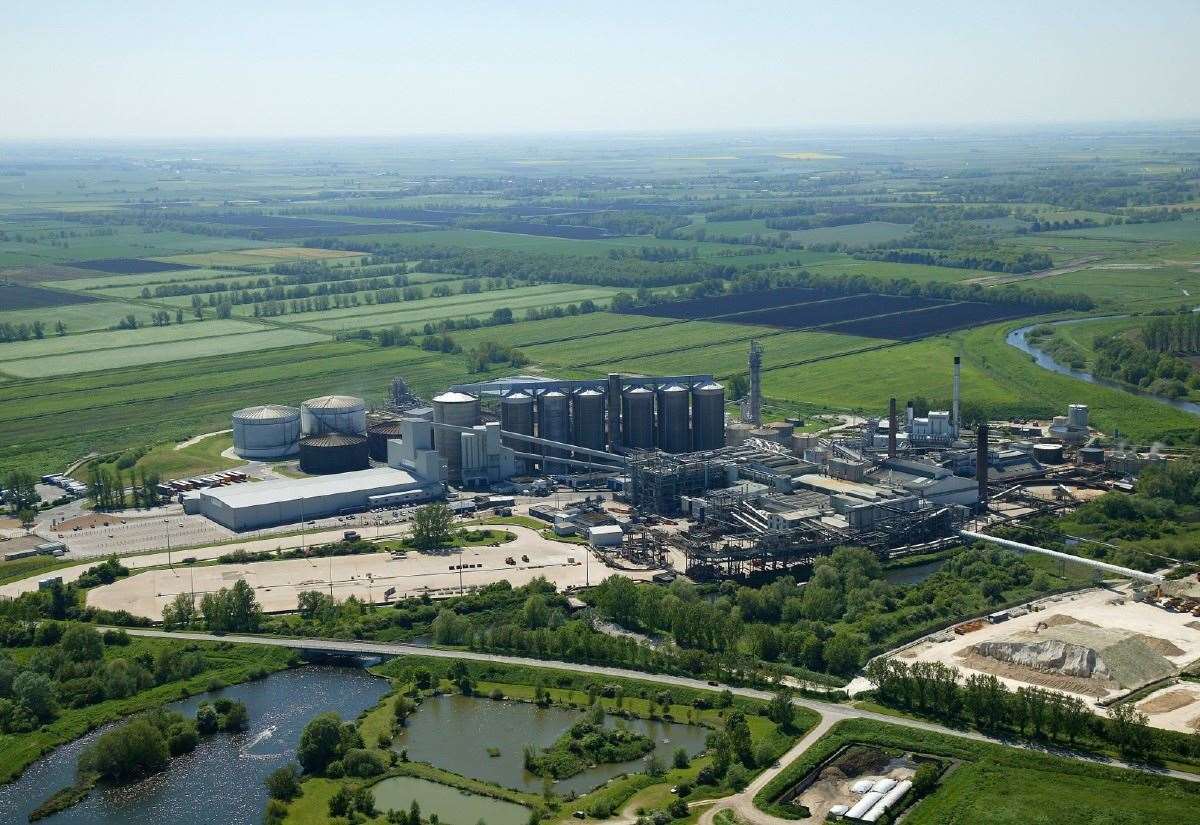
From 1925 to Today: Wissington Sugar Factory's 100-Year Evolution
For a century, the British countryside has been quietly feeding a sweet national appetite, thanks in no small part to facilities like the remarkable Wissington Sugar Factory. Often searched for as the
Whittington Sugar Beet Factory, the officially named Wissington site in Norfolk stands as a testament to agricultural innovation, industrial prowess, and enduring local pride. This sprawling operation, now hailed as Europe's largest and most cost-effective sugar processing site, is on the cusp of celebrating its centenary, marking 100 years of transforming humble sugar beet into the white crystals that sweeten our lives.
Its journey from a nascent venture to a modern titan of industry is a fascinating narrative of technological advancement, strategic expansion, and an unwavering commitment to efficiency. While the fundamental process of extracting sugar has remained remarkably consistent, the scale, speed, and sophistication behind it have undergone a dramatic, almost unbelievable, transformation.
The Dawn of an Industry: Wissington's Humble Beginnings (1925-1970)
The story of the Wissington Sugar Factory began in 1925, the brainchild of local entrepreneur Mr. W. T. (Bill) Towler. In an era when British agriculture was seeking new avenues, sugar beet cultivation offered a promising opportunity. The fledgling factory in Norfolk was a pioneering effort, designed to handle the then-impressive figure of 600 tonnes of sugar beet per day. This initial capacity, though modest by today's standards, was a significant undertaking, laying the groundwork for what would become an industrial landmark.
For over four decades, the factory operated, gradually refining its methods and establishing itself as a vital part of the local economy. Farmers in Norfolk and surrounding counties found a reliable market for their sugar beet, fostering a symbiotic relationship between agriculture and industry that continues to this day. The early years were about establishing the foundational processes, overcoming initial challenges, and incrementally improving efficiency within the constraints of the technology available at the time. It was a period of learning and growth, setting the stage for the dramatic changes that were to come.
The Era of Transformation: Expansion, Efficiency, and Europe's Largest (1970s-Today)
The most significant turning point in Wissington's history arrived in the 1970s. In 1971, the British Sugar Corporation embarked on a multi-million-pound rationalisation program across its British sugar factories. This included a substantial £10 million reconstruction and expansion of the Wissington site, a colossal investment for its time. The goal was clear: to shorten the processing season for sugar beet and increase overall efficiency.
This strategic move saw smaller, less efficient factories closed, while key sites like Wissington and York were expanded. The new layout at Wissington was meticulously designed to ensure a quicker turnaround for beet-laden lorries, which, even then, were arriving from a 30-mile radius. This foresight was critical, as farmers were continually increasing their yields per acre of sugar beet, demanding greater processing capacity. The expansion catapulted Wissington into a new league, transforming it from a regional processor into a national powerhouse.
Fast forward to today, and the results of this transformation are breathtaking. The Wissington Sugar Factory now proudly holds the title of "the largest and the most cost effective sugar processing site in Europe." Its daily capacity stands at an astonishing 20,000 tonnes of sugar beet. To put this into perspective, the 600 tonnes that the original 1925 factory processed in a full day can now be handled by Wissington in just one hour. This mind-boggling increase in productivity is a testament to relentless innovation and strategic investment over decades. The factory's continued evolution showcases how crucial it is for industrial sites to adapt and scale, ensuring they remain competitive and relevant. To delve deeper into the sheer scale of operations, check out
Wissington Sugar: Europe's Largest Processing 20,000 Tonnes Daily.
The Modern Marvel: How Wissington Processes 20,000 Tonnes Daily
The heart of Wissington's success lies in its sophisticated and highly automated processing capabilities. Operated by British Sugar, the factory runs 24 hours a day, seven days a week, from September to February, corresponding to the sugar beet harvesting season. Guiding this massive operation is General Manager Elliot Fisher, who has dedicated 31 years of his life to the factory, starting at the age of 16. His philosophy for energy efficiency is simple yet effective: "run it full and you run it fast."
The supply chain is a finely tuned marvel. Over 1,000 growers from Norfolk, Cambridgeshire, and Lincolnshire supply the factory, with the average distance between farm and factory a mere 28 miles. This localised sourcing not only supports regional agriculture but also minimises transport costs and environmental impact. On an average weekday, 1,000 lorries arrive, delivering their precious cargo to vast flat pads, each capable of holding an immense 55,000 tonnes of beet. For a closer look at this impressive logistical network, read
Inside Wissington: How 1,000 Growers Supply Europe's Top Sugar Site.
The sugar extraction process, though conceptually similar to 1925, is executed with unparalleled precision and speed:
- Arrival & Initial Cleaning: Delivered beets are first washed to remove weeds, stones, and other foreign materials, ensuring only clean beet enters the next stage.
- Slicing: The cleaned beet enters "hoppers" and is sliced at an incredible rate of just under 800 tonnes per hour. Elliot Fisher likens the resulting slices to "French fries." This "slice quality is everything," he notes, with an air blast system ensuring an "optimum cutting edge" for maximum sugar extraction.
- Diffusion: The slices then proceed to diffusers, where hot water is used to extract the sugar. This is where the sugar dissolves out of the beet.
- Purification: The raw sugary juice undergoes rigorous purification to remove all non-sugars, leaving a thick, pure sugary liquid.
- Evaporation & Crystallisation: This thick juice is then subjected to evaporation to remove excess water, concentrating it before it's sent to the refinery. Here, it crystallises into the familiar white granulated sugar we use daily.
- Packaging & Distribution: The final product is then transferred into 25kg bags, bulk tankers, or converted into liquid sugar, ready for distribution to various industries and consumers.
This highly automated, "lean operation" showcases how human ingenuity, combined with advanced machinery, has revolutionised industrial-scale food processing. The core process may not have "changed hugely" in the last 100 years, as Fisher states, but the *way* it's done—the speed, scale, and efficiency—has undergone a "dramatic change."
Sustainability and Impact: Beyond the Beet
The evolution of the Wissington Sugar Factory isn't just about output; it's also about its broader impact and increasingly, its sustainability. A facility of this magnitude in the 21st century must operate with a keen eye on environmental responsibility and community engagement.
While the primary product is sugar, Wissington operates with a commendable focus on resource utilisation. By-products, such as the extracted beet pulp, are not wasted but often repurposed as animal feed, creating a valuable secondary revenue stream and reducing waste. The factory's extensive use of local growers, averaging just 28 miles from the site, significantly cuts down on transport emissions, embodying a more sustainable, localised food system. Furthermore, modern processing techniques often incorporate water recycling and energy recovery systems, improving the factory's overall environmental footprint.
The economic impact of the Wissington Sugar Factory on its region is profound. It provides significant direct employment within its highly skilled operations and supports thousands more indirectly through its extensive network of growers, transporters, and ancillary services. As Elliot Fisher proudly asserts, it's a "great British product we can be really proud of. Grown in this country, processed in this country." This focus on local production contributes to national food security and injects substantial economic value into Norfolk, Suffolk, and Cambridgeshire.
Conclusion
The Wissington Sugar Factory, occasionally referred to as the
Whittington Sugar Beet Factory, stands as a centennial monument to British agricultural and industrial excellence. From processing 600 tonnes a day in 1925 to 20,000 tonnes today, its journey is a powerful narrative of adaptation, innovation, and an unwavering commitment to efficiency. As it approaches its 100th anniversary, Wissington is not merely producing sugar; it's nurturing local economies, fostering technological advancement, and demonstrating how a foundational industry can continuously evolve to meet modern demands. Its story is a sweet reminder of what sustained vision and dedicated effort can achieve.