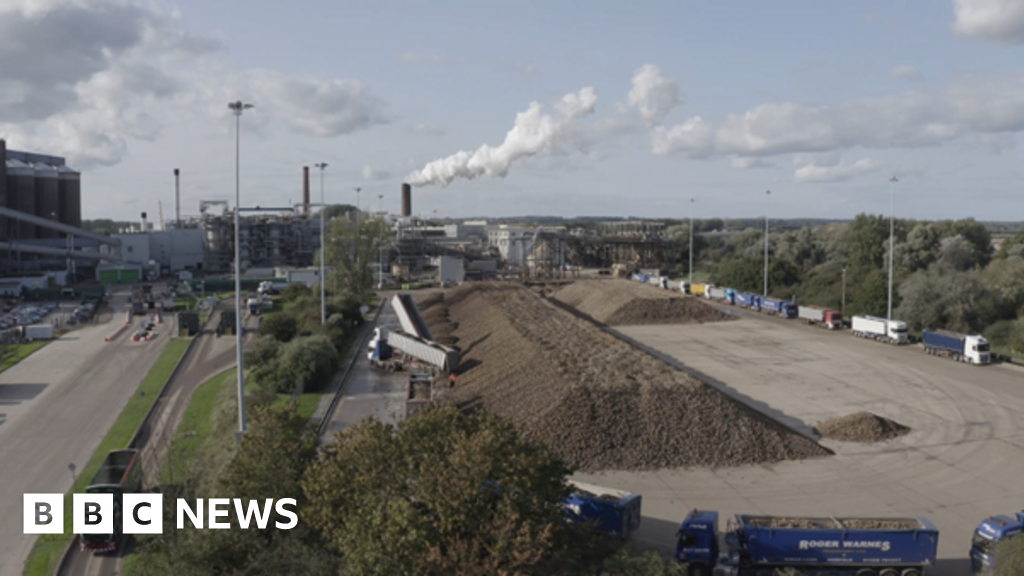
Nestled in the heart of Norfolk, the British Sugar factory at Wissington stands as a testament to industrial innovation and agricultural prowess. Far more than just a processing plant, the Wissington Sugar Beet Factory is an economic powerhouse and a marvel of modern engineering, proudly holding the title of Europe's largest and most cost-effective sugar processing site. Operating round-the-clock during its seasonal campaign, this iconic facility transforms an astonishing 20,000 tonnes of sugar beet into refined sugar every single day, playing a critical role in sweetening countless products across the continent.
From its humble beginnings nearly a century ago, Wissington has continuously evolved, blending time-honoured processes with cutting-edge technology. This article delves into the fascinating world of Wissington Sugar, exploring its journey from a fledgling factory to a European leader, detailing its intricate daily operations, and highlighting the vital process of turning a root vegetable into a household staple.
From Humble Beginnings to European Powerhouse: The Wissington Story
The story of the Wissington Sugar Beet Factory began in 1925, the brainchild of local entrepreneur Mr. W. T. (Bill) Towler. In an era when Britain was striving for greater food self-sufficiency, the establishment of a domestic sugar industry was a significant step. Back then, the factory was a modest operation, managing to process approximately 600 tonnes of sugar beet in a day. This initial capacity, while respectable for its time, pales in comparison to its modern capabilities. Today, the factory can process that same volume in just one hour, a clear indicator of the dramatic advancements made over the decades.
A pivotal moment in Wissington's history arrived in 1971, following a significant £10 million reconstruction and expansion project. This extensive upgrade was part of a broader rationalisation strategy by the British Sugar Corporation, aimed at consolidating operations and shortening the sugar beet processing season. By closing smaller, less efficient factories and expanding key sites like Wissington and York, the industry sought to enhance overall efficiency and throughput. The revamped layout at Wissington was specifically designed to ensure a quicker turnaround for the beet-laden lorries that converged from a 30-mile radius, catering to the increasing yields farmers were achieving per acre of sugar beet.
These strategic investments and continuous improvements have cemented Wissington's reputation not just in the UK, but across Europe. It's now celebrated as "the largest and the most cost effective sugar processing site in Europe," a true testament to its century-long journey of innovation and growth. To dive deeper into its rich past and significant milestones, explore From 1925 to Today: Wissington Sugar Factory's 100-Year Evolution.
The Daily Grind: A Glimpse into Wissington's High-Efficiency Operations
Operating almost like a living organism, the Wissington Sugar Beet Factory springs to life each year for its annual campaign, running 24 hours a day, seven days a week, typically from September to February. This intensive period is a symphony of logistics, technology, and human expertise, orchestrated to maximize efficiency and output. The factory's general manager, Elliot Fisher, a veteran with 31 years at Wissington, encapsulates its operational philosophy: "One way to run a sugar factory for real energy efficiency is you run it full and you run it fast."
The campaign begins with a colossal logistical challenge: the arrival of raw sugar beet. On an average weekday, approximately 1,000 lorries converge on the site, delivering their valuable cargo. These enormous quantities of beet are carefully stacked onto massive flat pads, each capable of holding an astounding 55,000 tonnes. This strategic storage ensures a continuous supply for the processing lines, minimizing downtime.
The supply chain feeding this industrial giant is equally impressive. Over 1,000 dedicated growers from the fertile lands of Norfolk, Cambridgeshire, and Lincolnshire contribute to Wissington's raw material needs. The average distance between farm and factory is a manageable 28 miles, highlighting the localized economic benefits and the close-knit relationship between the factory and its agricultural partners. For an in-depth look at this intricate network of suppliers, you might be interested in reading Inside Wissington: How 1,000 Growers Supply Europe's Top Sugar Site.
This "lean operation" is meticulously managed through a high degree of automation, a far cry from the labour-intensive methods of its early days. While the fundamental process of extracting sugar hasn't drastically changed in 100 years, the machinery and power behind it have undergone dramatic transformations, allowing Wissington to maintain its position at the forefront of the European sugar industry.
Mastering the Sweet Science: The Sugar Extraction Process at Wissington
The journey from a muddy sugar beet to sparkling white sugar is a sophisticated process, a blend of chemistry, engineering, and precision. At the Wissington Sugar Beet Factory, every step is optimized for efficiency and yield:
- Washing and Preparation: Upon arrival, the sugar beet undergoes rigorous cleaning. Large volumes of water are used to wash away soil, weeds, stones, and other foreign materials. This initial purification is crucial to prevent contamination and damage to subsequent machinery.
- Slicing: Cleaned beets are then fed into powerful slicers. As Elliot Fisher explains, "To get the sugar out, you have to diffuse the sugar in hot water. The first thing to do is break the sugar down into slices. Think of some French fries look." The slicer building at Wissington is capable of processing just under 800 tonnes of sugar beet an hour. The quality of these "cossettes" or slices is paramount, with an air blast ensuring the "optimum cutting edge" for maximum sugar extraction surface area.
- Diffusion: The sliced beet enters large diffusers, where hot water is circulated to extract the sugar. This is a process of osmosis, where sugar naturally moves from the beet cells into the surrounding hot water, forming a raw sugary solution.
- Purification: The raw sugary juice from the diffusers still contains various non-sugars, which must be removed. This is typically achieved through a series of chemical treatments (often involving lime and carbon dioxide) and filtration, which precipitate out impurities, leaving a clearer, thick sugary juice.
- Evaporation: With the impurities removed, the thick sugary juice undergoes evaporation to remove excess water. This concentrates the sugar solution, preparing it for the final crystallization stage.
- Crystallisation and Centrifugation: The concentrated syrup is then transferred to the refinery, where it's gently heated and cooled under vacuum conditions. This controlled environment encourages the formation of pure white sugar crystals. Centrifugal machines then separate these crystals from the remaining molasses.
- Drying and Packaging: The freshly crystallized white sugar is dried to remove any residual moisture, ensuring its quality and shelf life. Finally, it's prepared for distribution, either packed into 25kg bags, loaded into bulk tankers for industrial clients, or processed into liquid sugar solutions.
This entire process, though fundamentally unchanged in principle for a century, is executed with astounding speed and precision, thanks to continuous investment in automation and advanced machinery. The lean operation minimizes waste, with byproducts like beet pulp often repurposed for animal feed, highlighting a commitment to resource efficiency.
Wissington's Economic and Community Impact
Beyond its impressive processing capabilities, the Wissington Sugar Beet Factory is a significant pillar of the regional economy. Its operations create substantial direct and indirect employment opportunities for thousands of people across Norfolk, Cambridgeshire, Lincolnshire, and even Suffolk. From agricultural workers cultivating the beet to lorry drivers transporting it, and the skilled engineers and operators inside the factory, Wissington underpins a vital ecosystem of jobs and businesses.
Elliot Fisher proudly notes, "Grown in this country, processed in this country. A real British product we can be really proud of." This emphasis on local sourcing and production contributes to national food security and reduces reliance on imported sugars. Furthermore, the factory's commitment to energy efficiency and lean operations, while primarily driven by cost-effectiveness, also aligns with modern sustainability goals, striving to minimize its environmental footprint within its industrial context.
The British Sugar Wissington factory is more than just Europe's largest sugar processing site; it's a living legacy of innovation, efficiency, and community contribution. From processing 600 tonnes a day in 1925 to 20,000 tonnes daily today, its journey is a remarkable tale of adaptation and growth. It stands as a powerful symbol of British industry, continuing to sweeten lives and contribute significantly to the economic fabric of Eastern England. As it approaches its centenary, the Wissington Sugar Beet Factory remains a beacon of industrial excellence, poised to continue its vital role for generations to come.