Inside Wissington: How 1,000 Growers Supply Europe's Top Sugar Site
In the heart of Norfolk lies a titan of industry, a place where agricultural tradition meets cutting-edge processing technology to produce one of Britain's most essential food products: sugar. This is the British Sugar factory at Wissington, an operation so vast and efficient it has earned the moniker "the largest and most cost-effective sugar processing site in Europe." Supplying this powerhouse is a network of over 1,000 dedicated growers, forming a symbiotic relationship that fuels a remarkable journey from field to granule. When people search for 'Whittington Sugar Beet Factory', it's this iconic Wissington site they often have in mind.
From Humble Beginnings to European Powerhouse: The Evolution of Wissington
The story of the Wissington factory begins in 1925, an era when a fledgling sugar industry was taking root in Britain. In its inaugural year, this pioneering factory managed to process a modest 600 tonnes of sugar beet daily. Fast forward to today, and the scale of operation is nothing short of breathtaking. The same volume of beet that once took a full day to process is now dispatched in just an hour. This incredible leap in productivity is a testament to nearly a century of relentless innovation and strategic investment.
The original vision for Wissington was the brainchild of local entrepreneur Mr. W. T. (Bill) Towler. Over the decades, the factory underwent significant transformations, most notably a £10 million reconstruction and expansion completed in 1971. This period marked a rationalisation within the British Sugar Corporation, aiming to shorten the processing season and enhance efficiency. Smaller factories closed, while key sites like Wissington expanded dramatically. This expansion was crucial, not only to streamline operations but also to accommodate the increasing yields farmers were achieving per acre of sugar beet. Today, the Wissington Sugar Beet Factory processes an astounding 20,000 tonnes of beet every single day, maintaining its reputation as a global leader.
The Heart of the Operation: How 1,000 Growers Fuel Wissington's Success
The impressive capacity of Wissington wouldn't be possible without the extensive network of more than 1,000 growers. These agricultural partners, primarily from the fertile lands of Norfolk, Cambridgeshire, and Lincolnshire, are the lifeblood of the operation. Their dedication ensures a continuous supply of high-quality sugar beet, harvested and delivered during the crucial processing campaign.
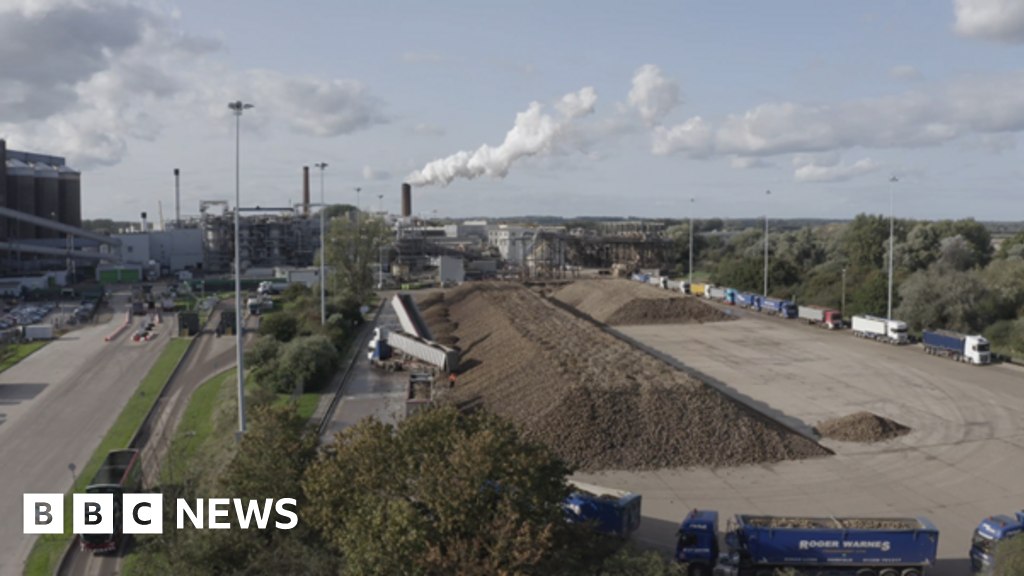
Logistics at this scale are a monumental undertaking. On an average weekday during the September-to-February campaign, a staggering 1,000 lorries converge on the Wissington site, each laden with sugar beet. These deliveries are meticulously managed, stacking the beet onto vast flat pads, each capable of holding an incredible 55,000 tonnes. The average distance a lorry travels from farm to factory is around 28 miles, a relatively short journey that underscores the benefits of local sourcing and minimises transportation emissions. This close proximity fosters strong relationships between British Sugar and its growers, ensuring consistency and quality from the very start of the supply chain.
- Partnership is Key: The long-standing relationships with growers are vital for maintaining a consistent supply and quality of sugar beet.
- Sustainable Sourcing: The relatively short transport distances contribute to a lower carbon footprint for the final product.
- Logistical Excellence: Managing 1,000 daily lorry deliveries and vast storage capacities requires military precision and advanced planning.
The Sweet Science: Unpacking the Wissington Sugar Beet Process
Once the beet arrives at the Wissington factory (often searched as 'Whittington Sugar Beet Factory'), it embarks on a fascinating journey of transformation. While the fundamental principles of sugar extraction haven't dramatically changed since 1925, the speed and efficiency with which it's executed today are lightyears ahead.
- Arrival & Initial Cleaning: The journey begins as the harvested beet is delivered to the factory and stacked. Before processing, the beet undergoes a thorough washing process, where sophisticated filters remove weeds, stones, and other foreign materials, ensuring only the cleanest beet proceeds.
- Slicing for Extraction: The cleaned beet then moves into large "hoppers" before entering the slicer building. Here, nearly 800 tonnes of sugar beet are sliced per hour. General Manager Elliot Fisher likens these slices to "French fries look" – a precise cut that is absolutely critical. An air blast ensures an "optimum cutting edge," as slice quality is everything for efficient sugar extraction.
- Diffusion – Unlocking the Sugar: The perfectly sliced beet enters massive diffusers. This is where the magic of extraction happens: hot water is used to diffuse the sugar out of the beet slices. The process efficiently separates the sugar from the fibrous material.
- Purification and Evaporation: What remains after diffusion is a raw sugary juice. This juice then undergoes extensive purification to remove all non-sugars, leaving a thick, pure sugary liquid. Next, this purified juice enters an evaporation stage, where all the water is meticulously removed, concentrating the sugar even further.
- Crystallisation and Packaging: The concentrated syrup is then sent to the refinery, where it's encouraged to crystalise into the familiar white granulated sugar we use daily. Finally, this pristine white sugar is either packaged into 25kg bags, loaded into bulk tankers for industrial use, or processed into liquid sugar, ready for distribution across Europe.
This entire, complex operation runs 24 hours a day, seven days a week, continuously from September to February – a period known as the sugar beet campaign. It's a testament to the factory's robust design and dedicated workforce.
Driving Efficiency and Innovation: The People and Technology Behind Wissington
The sustained success of the Wissington factory is a story of continuous innovation, strategic investment, and profound dedication. General Manager Elliot Fisher, who started working at the factory when he was just 16 and has now been there for 31 years, embodies this commitment. His philosophy for running a sugar factory effectively is simple yet powerful: "One way to run a sugar factory for real energy efficiency is you run it full and you run it fast." This mantra perfectly encapsulates the lean, automated operation that characterises modern Wissington.
While the core process of extracting sugar has remained fundamentally consistent over the last 100 years, the technology and machinery enabling it have undergone dramatic advancements. These technological leaps have transformed the factory floor, allowing for the astonishing throughput seen today. This commitment to automation and efficiency not only ensures cost-effectiveness but also plays a crucial role in the factory's energy footprint. By running at optimal capacity, the factory maximises its energy use, making it an incredibly efficient producer of sugar.
Beyond the impressive machinery, the Wissington factory is a significant employer and a source of immense pride. It creates a substantial "knock-on" effect for employment in Norfolk, Suffolk, and the surrounding regions. As Elliot Fisher proudly states, it's "a great British product we can be really proud of. Grown in this country, processed in this country. A real British success story." This self-sufficiency and local production are more vital than ever, highlighting the value of sites like Wissington Sugar Factory's 100-year evolution.
The Wissington factory is not just a place where sugar is made; it's a hub of agricultural excellence, engineering prowess, and economic vitality. From the fields of 1,000 dedicated growers to the highly automated processing lines, every step is a testament to precision, efficiency, and a deep-rooted commitment to producing quality British sugar. This synergy makes Wissington, often sought after as the 'Whittington Sugar Beet Factory', a true marvel of modern food production and a cornerstone of the regional economy.